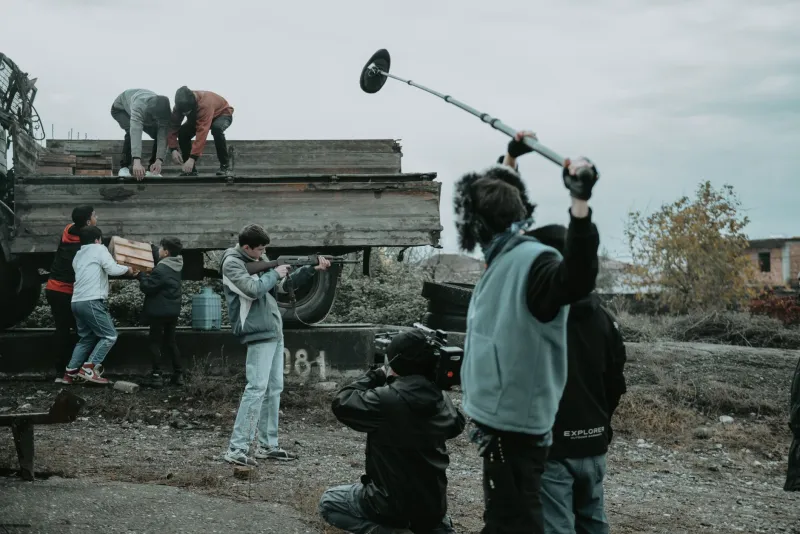
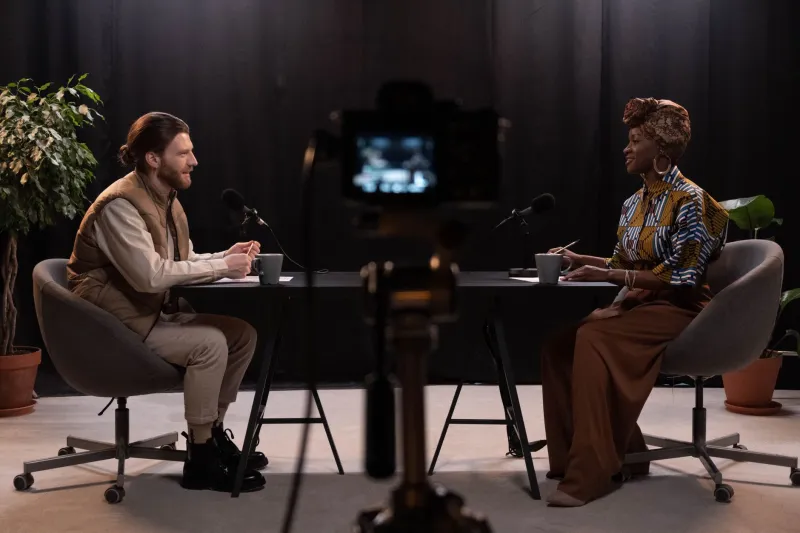
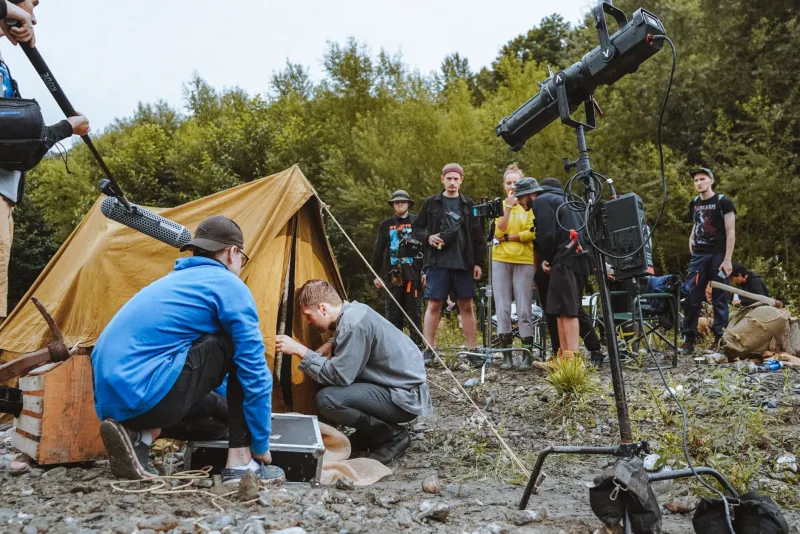
Human Furniture: The Stand-Ins Who Hold Your Favorite Star's Shape for $12 an Hour Less Than You'd Guess
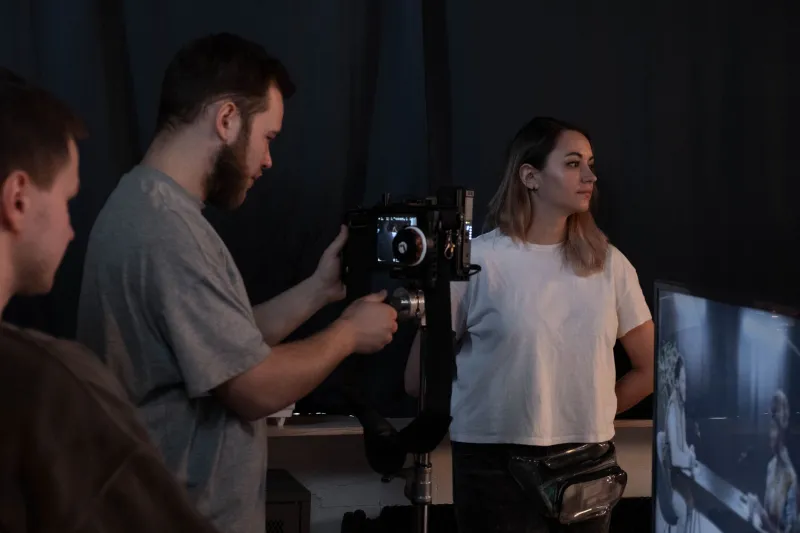
There's a moment on every TV set that audiences never see: a crew member squints at the monitor and says the words that make an entire career category exist — hit the light. Nobody famous is in the room yet. The person standing on the actor's tape mark, arms slightly out from the body in a pose the industry cheerfully calls the T, is a stand-in. And without them, your favorite drama would take roughly nine years to shoot.
We followed one of them — call her Denise, a ten-year veteran of a network procedural you've definitely watched while folding laundry — through a single week. What we learned is that the stand-in economy is one of Hollywood's strangest bargains: essential labor, barely visible, compensated at a rate that will not shock anyone who has read about the streaming bubble.
The Job Is Being a Warm, Correctly-Lit Object
Denise's official title on the call sheet is "Stand-In," which sounds decorative until you watch her work. She matches the lead actress's height, skin tone relative to the lighting, and hair color — because cameras calibrate to bodies, and every lighting tweak needs a body in the frame to calibrate against. While the star is in a trailer memorizing lines or doing press, Denise is standing on a mark while a gaffer nudges a fixture one inch to the left, then one inch back.
"People think we act," Denise told us. "We don't act. We are. We're furniture that gets up to get coffee."
The T-pose, the stillness, the ability to stand in one spot for 45 minutes while a director of photography mutters about barn doors — that's the craft. The best stand-ins also track continuity like hawks. Which hand held the coffee cup? Was the jacket zipped? Stars have been rescued from embarrassing errors by stand-ins with better memories than the script supervisor.
Show Me the Money (After Residuals Take a Haircut)
Here's the math that surprises people. Stand-ins on union productions fall under SAG-AFTRA background rates, not the performer scale you'd assume. A day rate for a stand-in on a network show starts a few hundred dollars above scale background — roughly in the neighborhood of $250–$300 a day before penalties — which sounds fine until you remember the day is frequently 12 to 14 hours.
The overtime quirks are where it gets weird. Under the agreements governing most shows, background performers hit overtime thresholds differently than principal cast, and meal penalty violations — meaning the crew ran late on lunch, which happens constantly — are one of the few reliable pay bumps. Denise keeps a running joke tally of "lunch penos" per season. Last season: twenty-three. "I'm basically paid in apologies," she says.
And residuals? Background performers generally don't get them, with narrow exceptions. The star's rerun pays her mortgage; the person who held her light pays for parking.
The Credit That Never Comes
This is the part that stings. Stand-ins almost never appear in the credits. Photo doubles — the ones who actually appear on camera, filmed from behind or in silhouette or in that wide shot where the star's schedule didn't align — sometimes get a courtesy mention. Usually not.
The logic is bureaucratic rather than cruel: credits are governed by contracts, and stand-ins fall into a category that simply wasn't negotiated into on-screen credit. So the person who spent 400 hours this season keeping the lead's eyeline consistent will watch the finale and see their own contribution reflected in exactly zero names.
There's a hierarchy joke Denise tells: "The actor thanks God, their agent, and their dog. I thank the craft services guy, because at least he knows my name."
The Stepping Stone Myth (and the Rare Exceptions)
The folk wisdom says stand-ins get discovered. The reality: a handful have made the jump — a few became stunt performers, a few landed speaking roles after directors noticed them, and one very famous case involves a young stand-in on a soap opera who parlayed the gig into a lead. But these are lottery tickets, not ladders. Most working stand-ins are career professionals who got very good at a job the industry prefers not to look at directly.
What keeps them there? Stability, oddly. A long-running series means a year of steady checks, health benefits through union hours, and — the real currency — relationships. Directors of photography request their favorite stand-ins by name. In an industry built on chaos, being the person who makes the star's light perfect is a niche worth defending.
Untangling the Thread
Every glossy magazine cover of a movie star is, functionally, a photo of lighting that someone else stood still for. The stand-in economy is Hollywood in miniature: glamour at the top, meticulous invisible labor underneath, and a rate card that doesn't quite square with the value created.
So the next time a scene looks impossibly good — that golden-hour glow, that perfect shadow across a leading man's face — spare a thought for the person who stood in the frame first, arms out, perfectly still, waiting for the star to show up and take the credit. They'll be back on the mark tomorrow. The light, after all, doesn't hit itself.