When the Credits Stop Rolling, the Rent Doesn't: Following the Money During a Production Shutdown
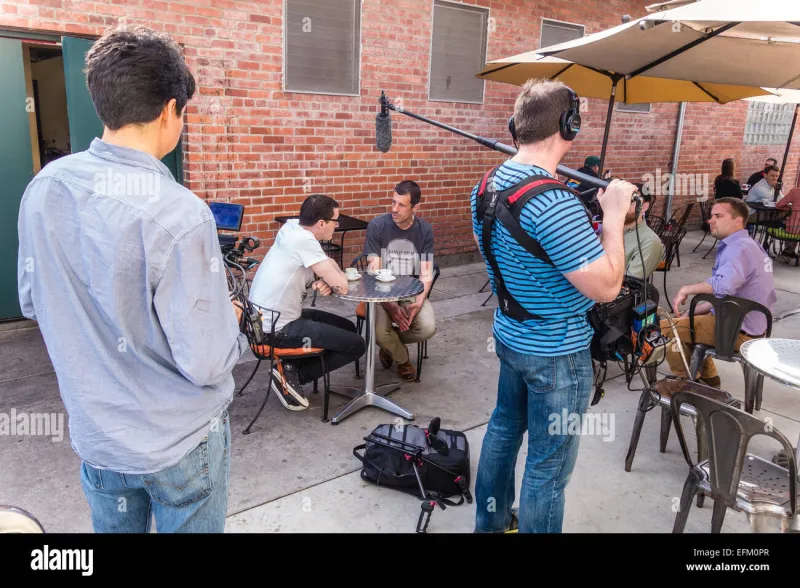
Photo: film crew break time coffee cart outside studio lot hollywood, via c8.alamy.com
Here's a fun party trick the next time someone at a barbecue starts romanticizing show business: ask them what happens to the person who refills the coffee on Stage 4 when production shuts down. Watch the conversation stall faster than a stalled pilot in development hell.
We all know the headline version of a Hollywood shutdown. The stars tweet. The union posts a statement in bold font. Variety runs a story with the phrase "ripple effects" in the first paragraph. But the actual ripple — the one that reaches the guy who's been renting out parking spaces near the studio gate for twelve years — that part rarely gets a paragraph, let alone a headline. So let's pull this thread properly.
The Two-Tier Magic Kingdom
Hollywood's labor market is essentially a split-level house, and the shutdown hits the basement first. Above ground, you've got the names: series regulars with residual structures, producers with backend points, showrunners with overall deals that pay whether cameras roll or not. These folks might feel a shutdown emotionally, but their mortgage broker is not losing sleep.
Below ground is everyone else. The background actors paid by the day. The stunt performers who book gig to gig. The lighting techs, the set medic, the person whose entire job title is "gang boss" and no, that's not a metaphor, it's a real crew position. Most of these workers are classified as at-will or day players, which means when the production pauses, their income doesn't dip — it evaporates. There's no severance email. There's often no email at all. You find out your show stopped when your call time never comes.
Some union members have health coverage that depends on hitting a minimum number of hours worked per quarter. Miss the threshold during a long hiatus, and you're not just losing income — you're potentially losing insurance right when you can least afford it. That's the detail that never makes the fan-cam TikToks.
The Safety Net Is a Very Small Net
Now, it's not a total free fall for everyone. Certain unions have hardship funds — strike funds, emergency assistance programs, the occasional charity partnership that gets announced with a photo op. SAG-AFTRA and the WGA have historically mobilized relief efforts during work stoppages, and the DGA maintains member support programs. These are genuinely meaningful, and during the last major strike cycle they helped a lot of households stay afloat.
But here's the thing about safety nets: they're designed for members of the club. The non-union stand-in who's been on the same show for three seasons? The day-play background performer? The non-union driver on a studio's vendor contract? They're standing outside the net entirely, holding their resumes.
And even the net that exists has holes. Relief funds typically cap payouts. They assume you'll be back to work in weeks, not months. And they can't pay your landlord, who — and we cannot stress this enough — does not accept "the industry is in transition" as a form of rent.
The Lot-Adjacent Economy Nobody Counts
Then there's the shadow economy that lives within a half-mile of every studio gate. The coffee stand that survives on crew runs. The taco truck parked on a side street near the production office, whose owner can tell you which shows are shooting by smell alone. The dry cleaner that handles costume rentals. The liquor store that quietly funds half of post-production.
When a show pauses, these businesses take the hit instantly and invisibly. A single hour-long drama can employ 150 to 200 crew members who buy lunch, gas, and coffee within walking distance of the lot every single day. Multiply that by a few concurrent shutdowns and suddenly the burrito stand is a leading economic indicator.
Ironically, some lot-adjacent businesses actually benefit from a certain kind of shutdown. Location shoots stop, which means productions cluster back onto studio lots — good news for the businesses near Paramount, bad news for the ones in the neighborhoods where exterior shoots usually park their trucks. Geography is destiny, even in burrito form.
Who Actually Gets Rich Off Your Favorite Show Going Dark
So who profits? Follow the money and you find a strange little roster. Residual-collecting performers keep getting checks from the back catalog — a shutdown is, perversely, good for streaming libraries, so expect your feed to get suspiciously full of "trending" shows that are actually just shows nobody can make new episodes of. Lawyers do well; hiatuses generate contracts, renegotiations, and the occasional lawsuit. Force majeure clauses — the fine print that lets studios walk away from deals when production becomes impossible — get read more carefully in a shutdown month than in the previous five years combined.
And the studios themselves? A pause on spending is, from a quarterly-earnings perspective, sometimes a feature rather than a bug. Content libraries keep licensing. Back catalogs keep monetizing. The machine doesn't stop making money when it stops making television — it just stops making it for the people who build the thing.
The Moral of the Thread
None of this is meant to turn your heart into a lump of coal. It's meant to reframe what a "shutdown" actually is. For the audience, it's a delayed premiere date. For the stars, it's a press cycle. For the bottom tier of the crew, the background performers, and the taco truck on Olive Avenue, it's a financial event with a hard deadline attached.
So the next time a show you love goes on hiatus and the internet erupts into hashtag warfare, maybe skip the discourse for a second and tip generously at the coffee stand by the studio gate. The person pouring it is, statistically speaking, more exposed to this business than anyone whose face you'd recognize. And unlike the studio, they can't just declare force majeure on their landlord.