The Byline Is Fake, the Deadline Is Real: Inside Television's Overnight Newspaper Prop Trade
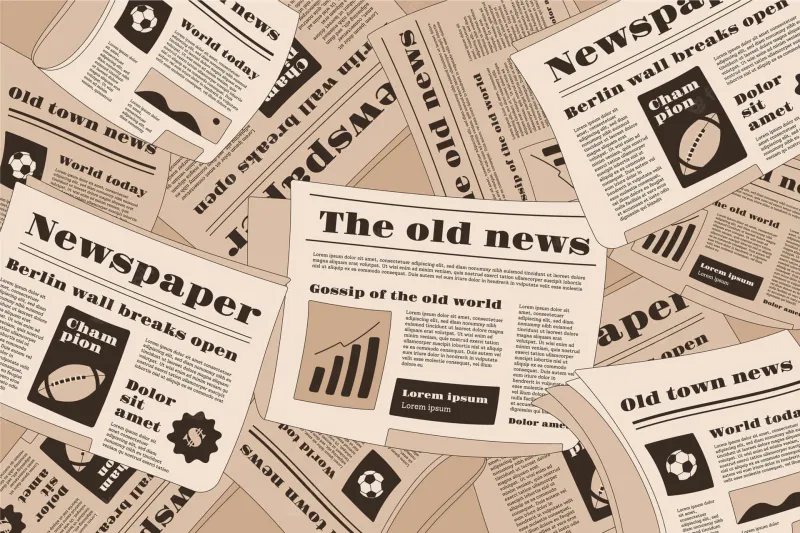
Photo: newspaper prop graphic designer television set art department, via wallpapers.com
At 3:47 a.m. on a soundstage in Queens, a graphic designer named Mara is building a newspaper that does not exist. The headline is 'MAYOR HID FUNDS,' the subhead is 'Aide Alleges Cover-Up,' and the photo is a stock image of a man in a suit looking vaguely guilty. The paper is called 'The New York Ledger,' which is not a real newspaper, but it will appear in the background of a network cop show for exactly four seconds. Mara has 28 minutes to finish it before the prop master walks it to set.
The 4 A.M. Edition
Television's fake newspaper industry is small, weird, and absolutely essential. Every procedural, political thriller, and sitcom that needs a character to react to a headline relies on prop graphics artists who can manufacture a plausible front page before the coffee is ready. The work is part graphic design, part improvisation, and part psychological thriller. The deadline is not a suggestion. The deadline is the moment a camera operator raises an eyebrow.
'You can't just print a real newspaper,' Mara says. 'First of all, rights. Second of all, the show might be set in a city that doesn't exist. Third of all, the headline has to serve the story. If the plot says the mayor is hiding funds, the newspaper has to say the mayor is hiding funds. But it also has to look like a newspaper that would actually report that, which means the font, the layout, the byline, and the photo all have to agree.'
Why the Font Betrays You
The wrong font can pull a viewer out of a scene faster than a boom mic in the frame. A fake newspaper using Comic Sans for a murder headline feels like a prank. A fake newspaper using the wrong version of a broadsheet masthead feels like a community theater production of 'All the President's Men.' Prop graphics artists develop encyclopedic knowledge of typefaces the way sommeliers know wine. They can tell you why a tabloid uses a different headline weight than a broadsheet, and why a fictional paper set in Chicago should not look like a fictional paper set in Los Angeles.
'Viewers don't know they're looking at a font,' says a prop master who has worked on three network dramas. 'But they know when something feels wrong. The newspaper is a background prop until it isn't. The moment an actor picks it up and reads the headline, it becomes a character. It has to have a personality. It has to have a point of view. It has to look like it was printed by people who hate each other and have a deadline.'
The Fake Website Is the New Front Page
In 2026, the fake newspaper is only half the job. Shows increasingly need fake websites, fake social media posts, and fake cable news chyrons. A political thriller might require a fictional news site with a homepage, an article page, and a comments section full of plausible trolls. A sitcom might need a fake celebrity gossip blog with a headline that makes the audience laugh before the character reads it aloud. The art department builds these assets overnight, often using templates that can be reskinned for different shows.
'We have a fake website generator that is basically a CMS for lies,' Mara says. 'You pick a template, you drop in a headline, you add a byline, and you export a screenshot. The trick is making it look real enough that the audience doesn't question it but fake enough that no one sues us. It's a fine line. It's a very fine line.'
The Art of the Plausible Byline
A fake newspaper lives or dies by its byline. The name has to sound real without belonging to a real person. It has to fit the paper's demographic, the story's tone, and the actor's eyeline. Prop artists keep lists of invented names: 'Diane Mercer,' 'Paul Whitaker,' 'Elena Ruiz.' They avoid names that are too famous, too generic, or too close to a real journalist who might see the show and tweet about it.
'You develop a sixth sense for names,' Mara says. 'A byline like "John Smith" says you didn't try. A byline like "Bartholomew Q. Hargrove" says you tried too hard. The sweet spot is a name that sounds like it belongs to a person who has a mortgage and a favorite sandwich.'
When the Prop Becomes the Plot
Sometimes the fake newspaper becomes the plot. A headline that was supposed to be background gets picked up by a character, quoted in dialogue, and referenced in a later episode. Suddenly the art department is getting notes from the writers' room about a prop they made at 4 a.m. on a Tuesday. The prop has continuity. The prop has lore. The prop has a fake website with a fake comments section that fans will screenshot and analyze.
'It happened to me once,' Mara says. 'I made a fake newspaper for a cop show. The headline was "City Councilman Questioned in Land Deal." Six episodes later, the councilman was a recurring character. The writers wanted to know what the newspaper looked like in the earlier episode so they could match it. I had to dig through my files and find the original. It was 4:12 a.m. on a Thursday. I remember because the prop master brought donuts.'
By 4:15 a.m., the 'New York Ledger' is printed, folded, and placed in a plastic bag on a table outside the stage door. It will appear in the background of a scene for four seconds. No one will read the byline. No one will notice the font. But if the font is wrong, someone will notice. That is the job. That is the fake news that keeps the real show running.